Guillermo Bellod Ortuño (Orihuela, Alicante, 1974) is a visual artist and holds a PhD in Artistic Production from the Universitat Politècnica de València. He studied at the Faculty of Fine Arts in Valencia and furthered his education in London through an Erasmus scholarship. He later received a Leonardo Grant, which enabled him to continue his practice for two years at the Bronze Age foundry in London, developing new work and participating in exhibitions within that international context.
His pictorial research focuses on the pictorial field understood as a space of experience, where light, perception, and symbol operate as active structures of meaning. This line of inquiry led to the formulation of his ongoing project, Latent Paintings, through which he investigates the latent dimension of the image and the tension between visibility and concealment.
He has carried out academic and artistic activity in Santo Domingo (Dominican Republic) and in Havana, where he taught a course on Cuban figurative painting. His work is included in international public and private collections.
He is currently a professor at the Schools of Art and Design in Valencia, where he lives and continues to develop his artistic research.
Bellod is a contemporary artist whose pictorial practice unfolds in a territory where light, image and perception intertwine with a symbolic dimension. His work proposes an experience in which painting reveals itself variably, inviting attentive contemplation.
In this context, the image appears and withdraws, constructing a field where the technical and the poetic coexist as part of the same structure.
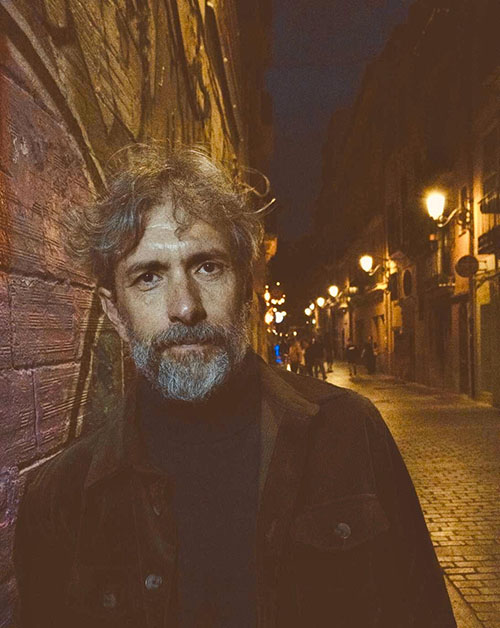
Photograph by Rubén Morales