
Julian Mercer
Contemporary Art Critic
London, 2026
⸻
That afternoon, Valencia seemed to breathe beneath a burning sky. The light did not simply illuminate; it seemed to expand through the air, making the horizon vibrate in blazing oranges and yellows. There was a particular quality to that clarity, almost tactile, as if colour were not descending from above but emerging from the space itself.
That vibration did not disappear upon crossing the door of the studio. The colours of the sunset lingered on the retina as the first artificial lights began to modulate the painting. There was no rupture between exterior and interior; the intensity simply changed its form.
The painter moved in and out of the beam of light that fell across the canvas and the surrounding penumbra. He adjusted the lamp, observed in silence, returned again to the surface. He moved in and out of the light as if his own body formed part of the scene. He did not appear to be illuminating a finished image, but rather provoking the image to react.
Only then did it become clear that this was not simply a matter of painting and then illuminating, but of painting through light. The gesture does not end at the surface; it continues in the modulation of light itself, almost like a silent choreography between body and lamp.
In one corner of the studio rests a collection of stones gathered in different places. From time to time the painter picks one up and holds it for a few seconds, as if needing to confirm its weight. They do not function as explicit symbols but as physical presence. Against the mobility of light, matter remains. That tension runs through his painting.
Taken together, these paintings function less as closed narratives than as systems in transformation. The image does not merely represent; it redistributes scales and hierarchies within the pictorial space. The paintings offer no answers; they establish structures in tension.
Among the works in this group, there are four in which these transformations become especially visible. I do not take them as isolated episodes, but as moments in which the system reveals itself with particular clarity.
⸻
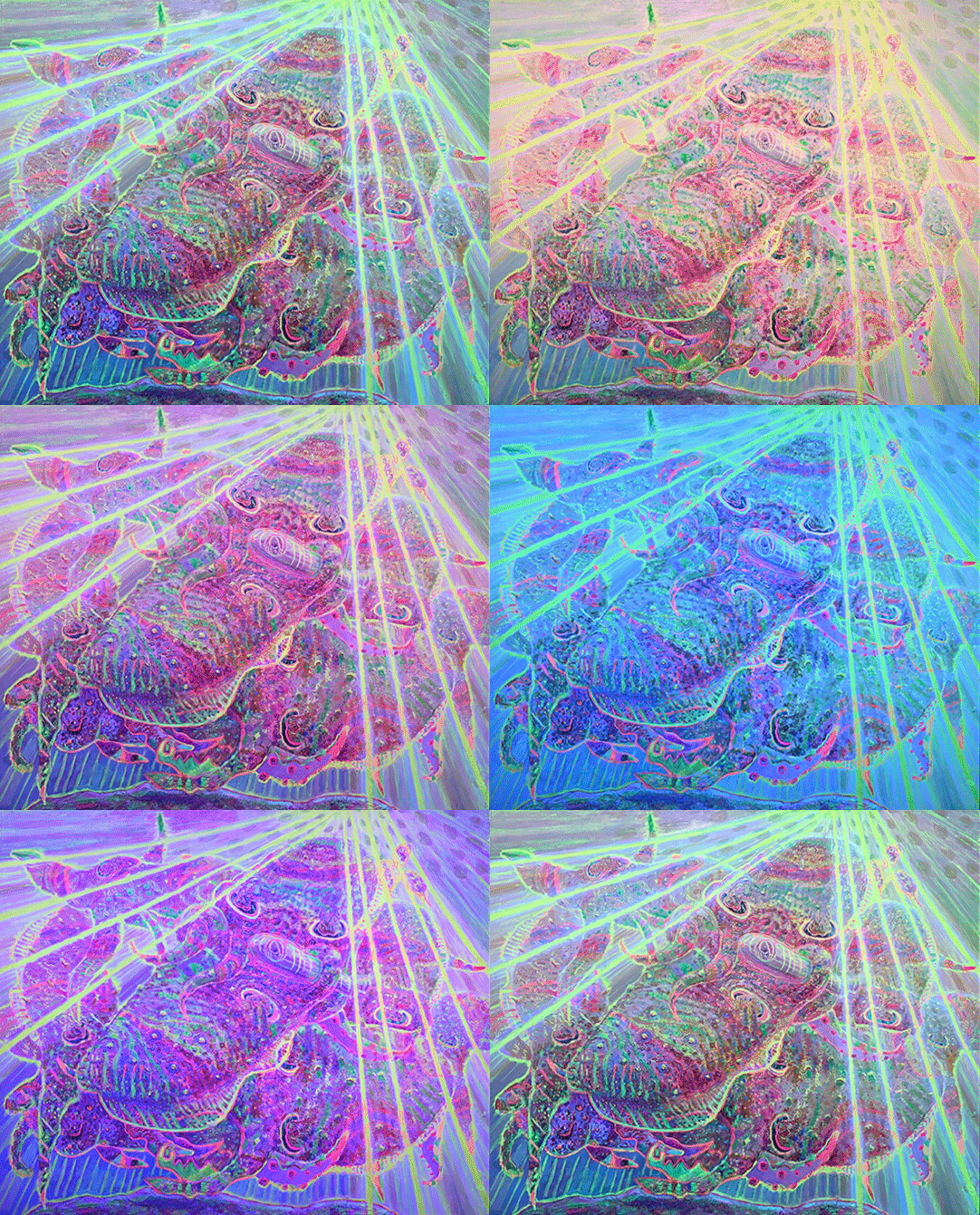
Oniricatchsub
In this work, the first element that unsettles the viewer is scale. Proportions do not follow a stable logic: what should be minute acquires a dominant presence, while what might be expected as a centre dissolves within the whole. This inversion does not generate disorder but a different form of organisation.
The apparent chromatic chaos is sustained by a carefully constructed perspective that articulates planes, depths and visual trajectories. The scene does not disperse; it organises itself according to an internal logic that demands more than a single glance.
Within this structure, the treatment of the cuttlefish reveals a careful study of their anatomy. The textures, the small protrusions of the skin and the chromatic patterns suggest attentive natural observation that simultaneously becomes graphic reinterpretation.
Light plays a decisive role here. It does not act as an external spotlight modelling volumes, but rather as an epidermal quality. Under different intensities, colour seems to move across the surface of the bodies, intensifying or fading, as if the painting were absorbing the logic of certain marine mutations. Illumination does not simply reveal form; it destabilises it.
Formally, the accumulation of figures and the insistence of chromatic rhythms create a density reminiscent of certain Baroque backgrounds, where matter invades the visual space without leaving emptiness. The lighting, theatrical in its penetration, introduces beams that feel almost scenic within an organic environment. The animal surface functions as a single organism responding to a shared vibration.
⸻
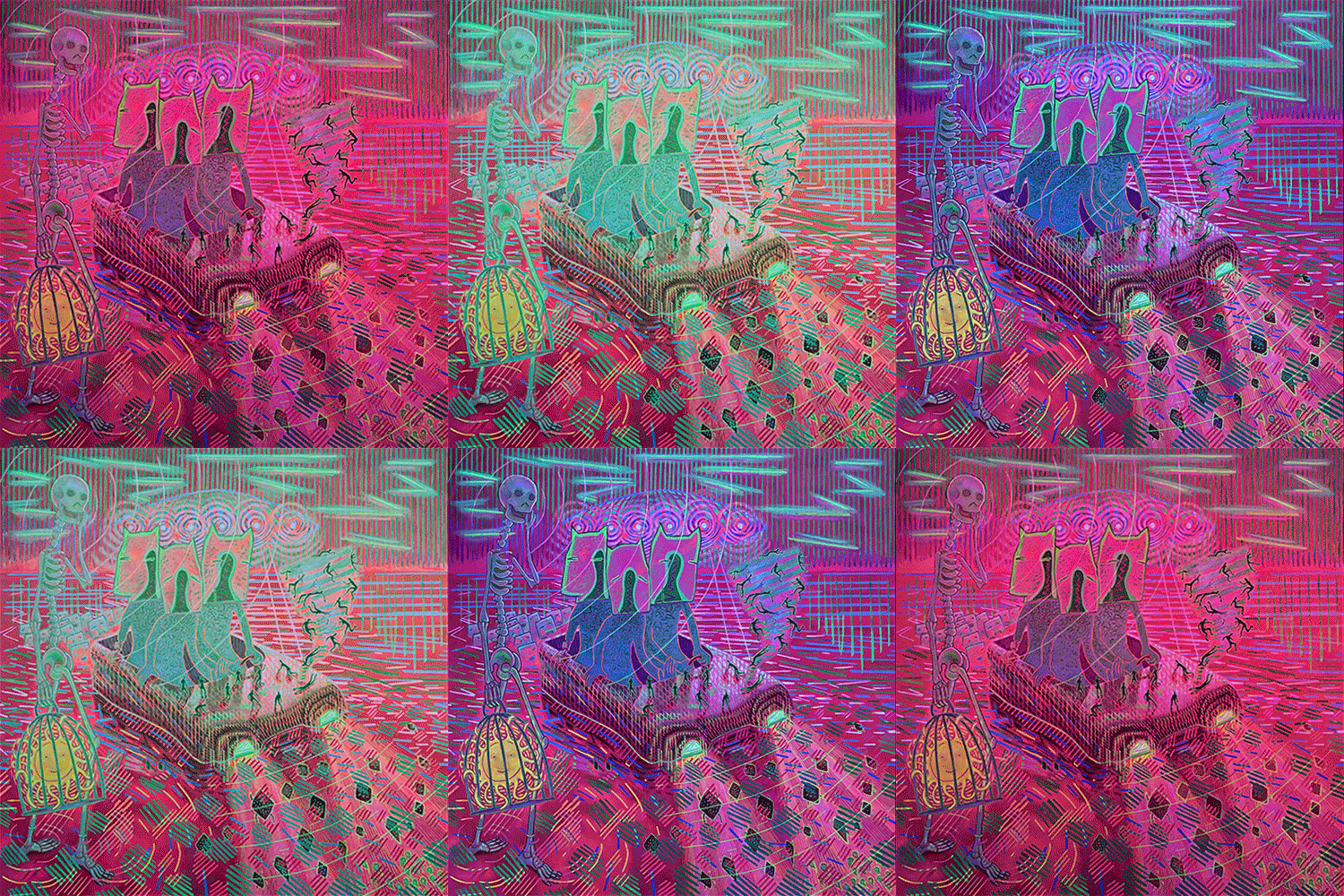
Anthropogenesis of a Madness
In this work the symbols do not appear as closed emblems but as elements in continuous readjustment. The painting does not organise the scene through moral hierarchies but through active tensions that run across the entire composition.
Formally, the surface recalls a Flemish tapestry displaced into a contemporary, fluorescent register. The concentration of scenes within a single space, the persistence of patterns and the repetition of signs create an almost textile density. There is no emptiness. Everything is occupied by rhythm. Yet this saturation does not suffocate; it organises.
The surface of the water divides the scene. Each side seems to contain its own episode and its own focus of light, which activates or recedes as the illumination shifts. Light does not arrive from outside; it is embedded within the image itself. In darkness, fluorescence acquires an autonomous presence and reveals areas that previously remained latent.
⸻
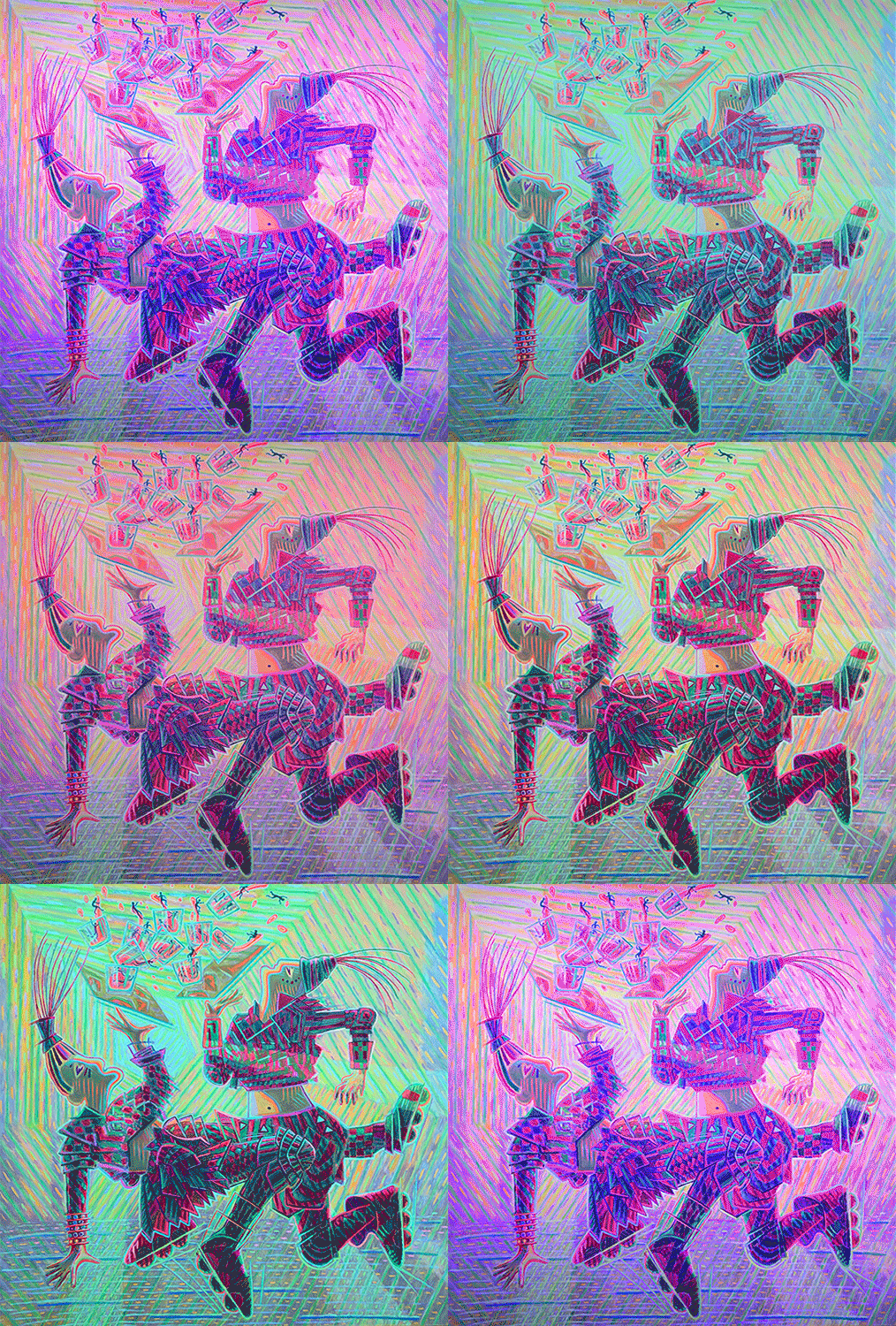
Transaction at the Edge of Self-Love
The scene is constructed through collision. Two suspended bodies converge at a point of contact that is not purely violent but choreographic. The impact does not explode; it organises itself. Tension becomes gesture. In this arrangement there is something of the dynamism of the Baroque, recalling certain compositions by Rubens.
Their costumes, constructed through defined geometric patterns and precise contrasts, evoke a certain Art Deco sensibility. Stylisation turns the body into design without losing intensity.
Above their heads, the contents of the trays unfold like a scene within the scene. The “transaction” is not merely an exchange between two confronting figures; it is a transfer of energy. Something is released at the moment of contact, altering the overall balance of the composition.
Lighting reinforces that transfer. Backlighting outlines the bodies, while transparencies make them appear mutable. With each shift of illumination the scene takes on a different character, and the impact remains suspended. The energy contained within it has not yet decided its final state.
⸻
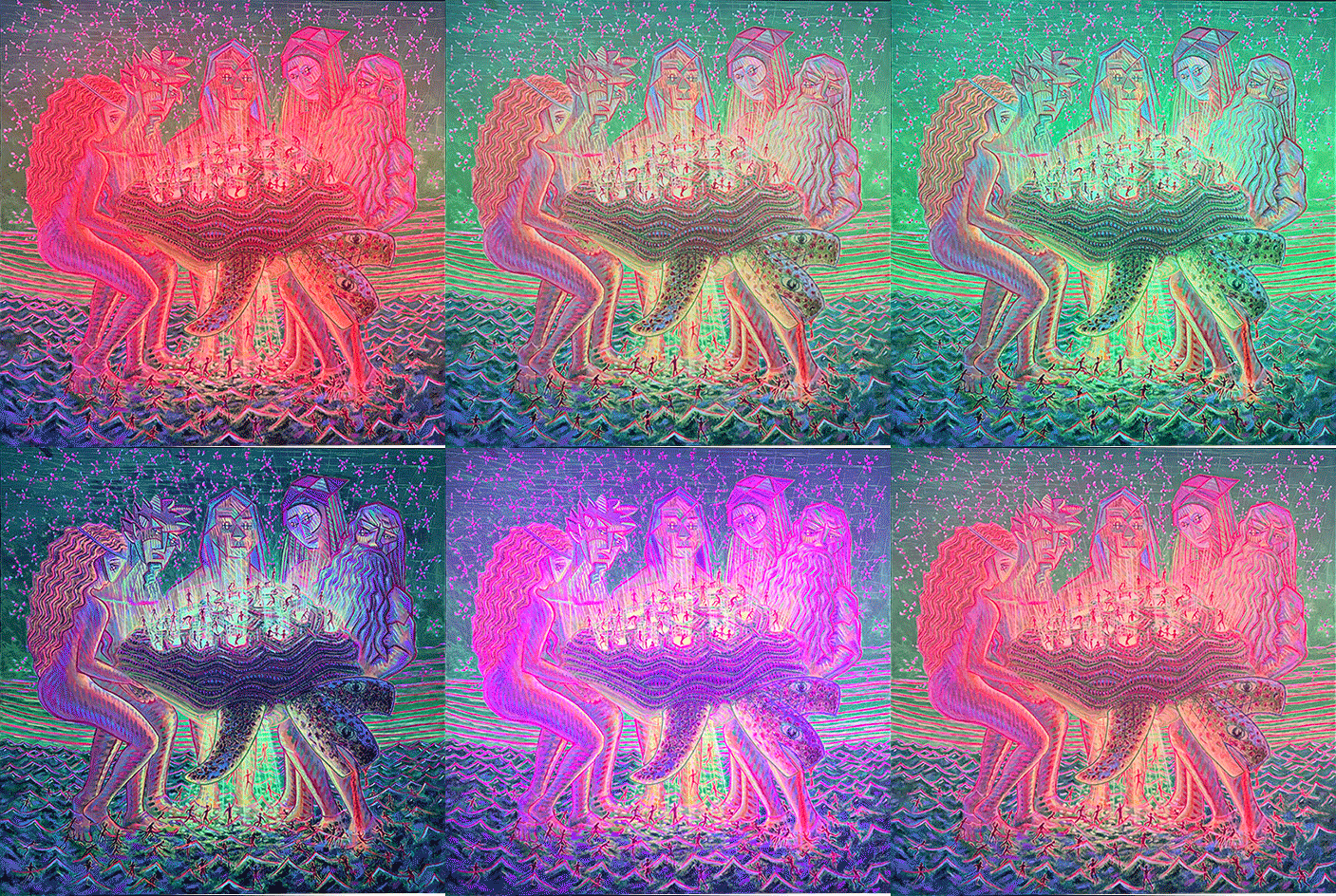
The Journey of Gaia
The scene asserts itself through its monumentality. The figures do not dominate; they sustain. Their legs, held in tension, act like columns, forming an improvised temple moving through the darkness. There is no sculptural rigidity, but rather a contained energy maintaining equilibrium.
In the solidity of the bodies one senses a classical resonance—something that recalls the structural clarity associated with Phidias—yet that stability is crossed by a geometrisation that brings the forms closer to an almost Byzantine synthesis. The star-filled background intensifies this sensation: it is not decorative, but vibrational.
Light seems to emerge from within, transforming weight into fragility. What appears firm also seems vulnerable. Without explicit declaration, the painting suggests a position: that which sustains the world is also exposed.
The journey is not heroic; it is necessary.
⸻
Before leaving, I asked whether a painting ever truly comes to an end. “The light fades, but what you’ve seen stays with you,” he said. He then shifted the illumination towards a deeper blue and, with a brief flare, allowed the image to dissolve until it disappeared entirely. The area around the easel fell into shadow. For a few seconds, however, the painting seemed to persist—held in the eye, as if resisting its own disappearance. Perhaps it was no longer the image itself, but its afterimage. Something that belongs neither to light nor to matter, yet continues to assert itself.
⸻
Julian Mercer
Inmersión: Pigmento y Luz
Javier Montes de Oca
Art Historian
Valencia, 2012
The opening of Immersion: Pigment and Light proposed an unusual experience within the exhibition space. Upon entering the gallery, visitors initially found themselves in near-total darkness. Almost imperceptibly, the lighting began to shift, gradually revealing the space and the paintings. After a few minutes, the cycle reversed, returning the room once again to darkness. This continuous transition between light and shadow created a singular temporal perception, as if the works themselves were breathing within their own rhythm.
Within this setting, the paintings from the Latent Paintings project appeared as surfaces of dense material presence. The works revealed a very precise attention to pictorial matter. Rocks, plants, skins or submerged landscapes seemed to emerge from the surface under a strange and vibrant epidermal appearance generated by the craquelure of the paint. Rather than representing an underwater landscape, the paintings seemed to construct it through the very physicality of pigment. Painting does not represent the underwater landscape: it constructs it from the matter of pigment.
During a brief conversation with the artist at the opening, he explained that his interest was not limited to the marine motif itself, but to the possibility of working with painting as a territory in transformation. Light, he suggested, should not merely illuminate the work from the outside, but participate in the construction of the image itself.
The presence of the light sculptures by industrial designer Joan Rocabert reinforced this relationship between space, light and painting. His devices subtly altered the perception of the environment, generating an ongoing dialogue between the shifting illumination of the room and the pictorial surfaces.
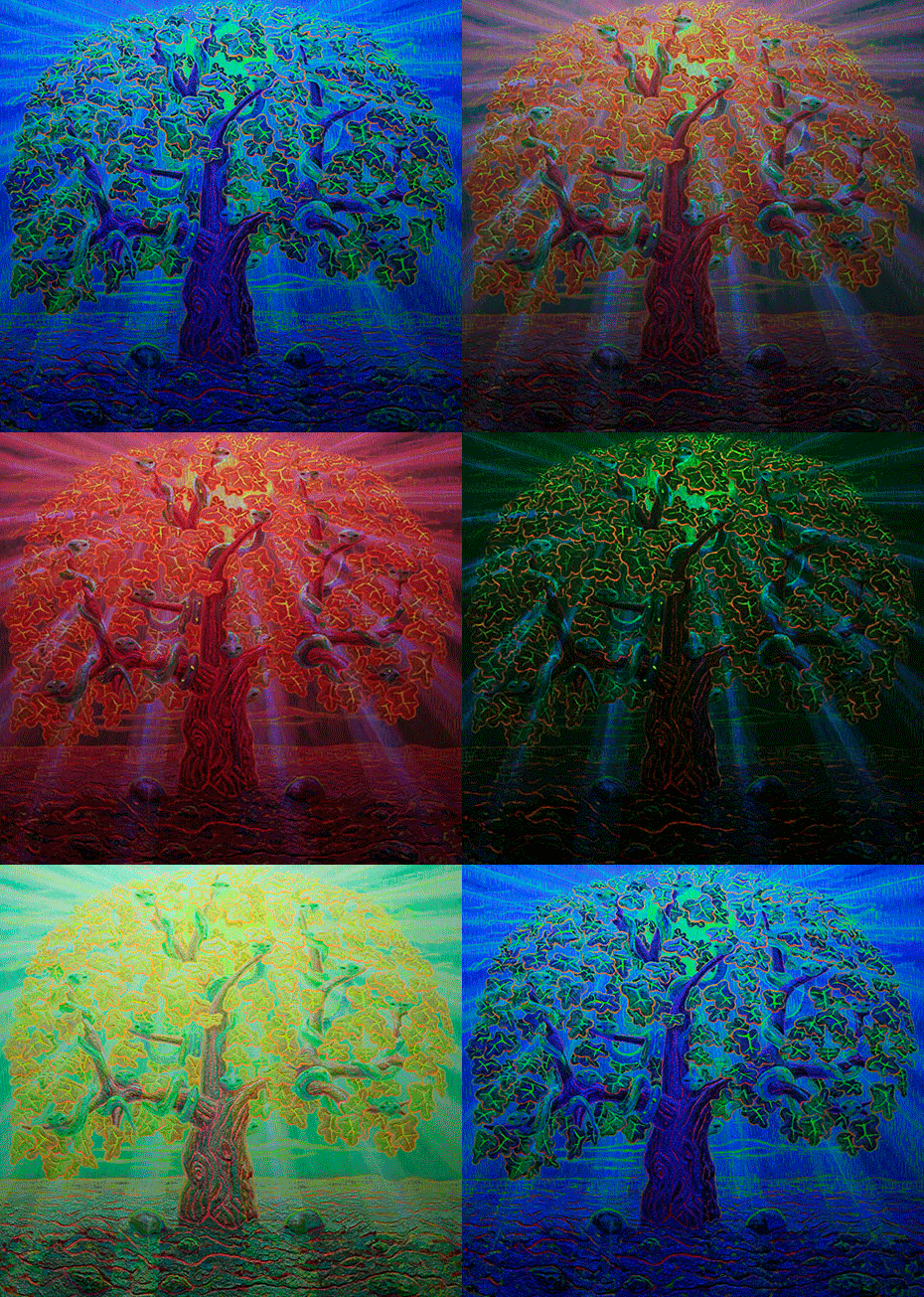
Among the works exhibited, the large-scale painting A Time After Adam and Eve stood out. The serpents that traverse the tree establish a visual rhythm that captures the viewer’s gaze and produces a strangely hypnotic sensation. As the lighting in the room shifted, the tree seemed to breathe: the leaves gathered energy, retaining the light within the texture of the pigment.
Painting does not represent the underwater landscape:
it constructs it from the matter of pigment.
Javier Montes de Oca
This section brings together a selection of critical texts on Bellod’s work, written by curators and specialists in contemporary art.
Through these readings, his pictorial practice is situated within a broader context, addressing questions related to light, perception and the construction of the image.