Collecting a work
Collecting a work of art is establishing a relationship with it.
It is not simply about owning it, but about recognizing in it something we want to preserve, contemplate and rediscover. When a work enters a collection, it ceases to be solely the artist’s work and also becomes part of the story of the person who chooses it.
For centuries, collecting has meant preserving a piece and incorporating it into a personal heritage. Bellod Collection starts from a broader idea: collecting can also mean taking an experience with you. A contemporary artwork contains research, a process, materiality and its own identity. By incorporating it into a collection, the viewer also acquires the possibility of maintaining an ongoing relationship with it: learning its history, contemplating it again, discovering its different manifestations and accompanying the development of the research around it.
The experience of the work
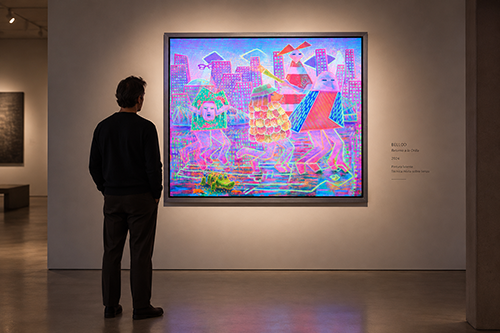
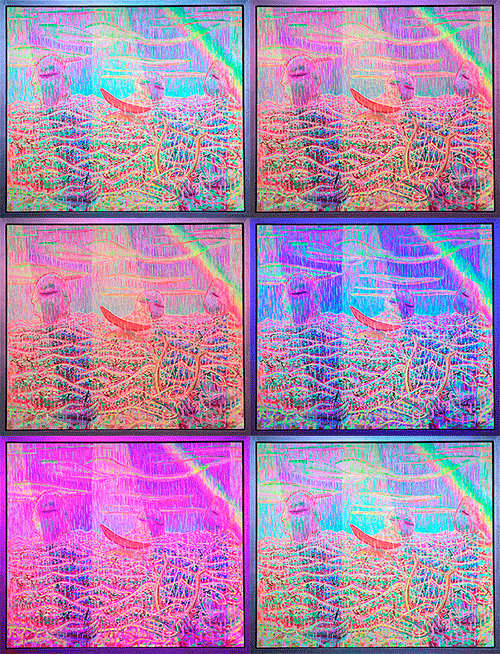
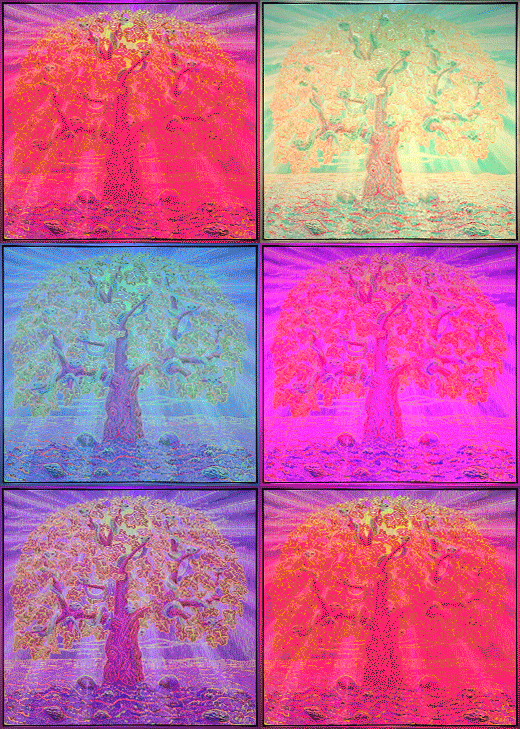
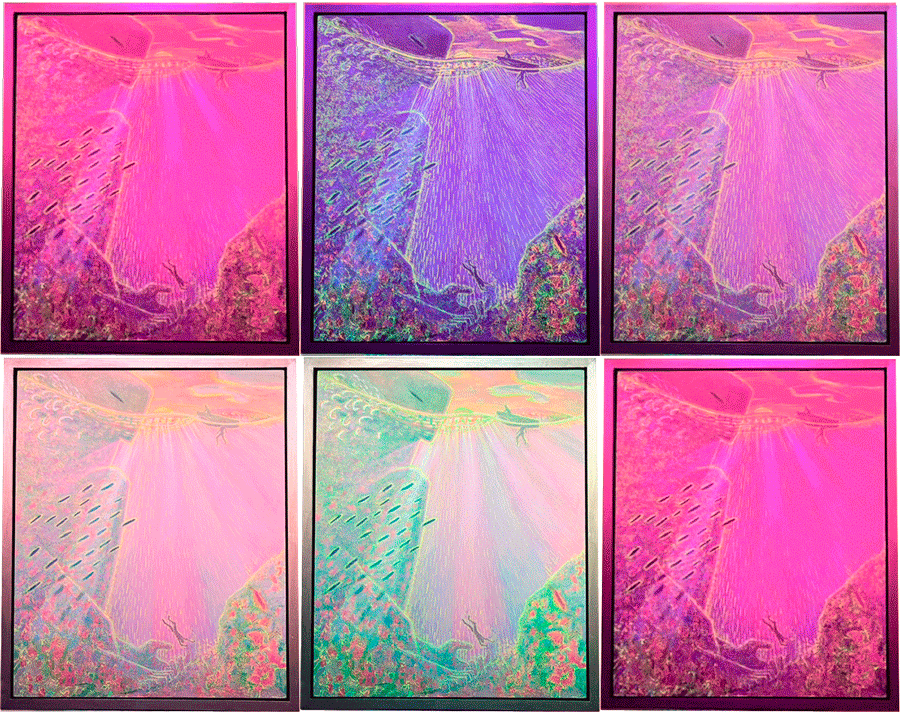
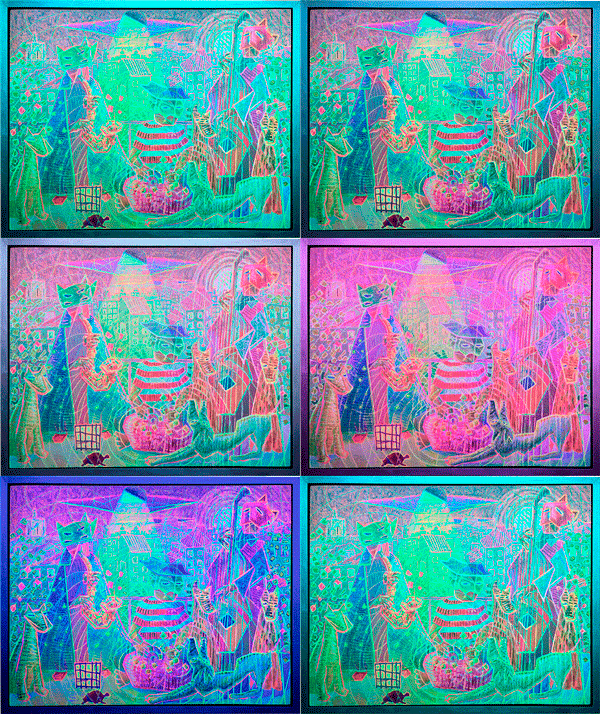
In some works, the experience does not end with what we see. A work may contain different ways of manifesting itself and being contemplated. In Latent Painting, this possibility arises from the relationship between matter and light. Illumination intervenes in the perception of the painting and can reveal aspects that remain hidden at first sight. The same work can offer different experiences without ceasing to be the same work.
Collecting that work also means taking that possibility with you.
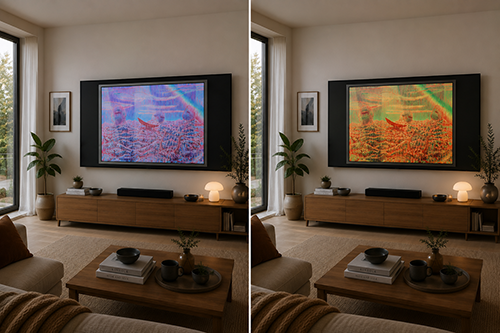
The relationship between painting and light can be transferred to the collector’s space. The work can remain present on a screen, be contemplated under different forms of illumination and become part of the everyday environment. It is not necessarily about sitting down to watch a work from beginning to end, but about living with it.
The work can remain on in the space and be contemplated again at different moments. Each encounter can be different.
Collecting in the present
Technology has opened up new possibilities for contemporary collecting. A digital work can be individually identified, limited and verifiably registered, preserving fundamental aspects of collecting: its uniqueness, identity, authenticity and belonging to a collection. Technology does not replace the work. It makes it possible to establish a more precise relationship with it and to preserve its identity and provenance digitally.
Bellod Collection
Bellod Collection was created to extend the relationship between the work and the person who chooses to incorporate it into their space. Each piece retains its identity, history, trajectory and experience. The collector can contemplate it in their own environment, learn about its process and accompany the research that continues to develop around it.
Collecting is preserving.
Collecting is experiencing.
Collecting is establishing a relationship with the work.
How to collect a Bellod work?
Bellod Collection offers different ways of incorporating a work into a collection. Each edition is conceived so that the collector acquires not only a piece, but also an experience connected to the work, its process and its trajectory.
Original Collector Edition
100 editions per work
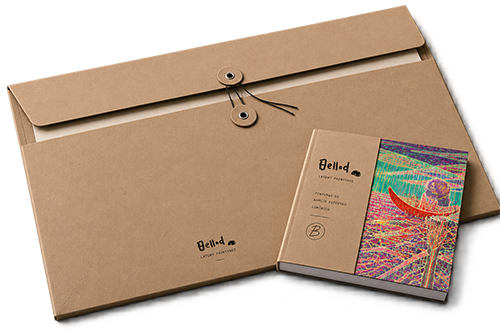
The Original Collector Edition allows the collector to incorporate an Official Digital Artwork into their collection, individually identified and registered using blockchain technology.
The work is prepared to be contemplated in high resolution on televisions, Smart TVs and large-format screens. Its cyclical nature allows it to remain continuously connected, becoming another presence within the space.
The edition also includes a signed A3 print by the artist, representing the work and its different illuminations, and a 20 × 20 cm booklet dedicated to Return to the Shore, with information about the works, the project and its process.
It also includes Living Work, a digital space associated with the piece where its journey is preserved: sketches, studies, tests and other materials connected to its creation, as well as the experiences the work incorporates throughout its trajectory.
€75 €
65 with voucher
Original Founder Edition
10 editions per work
The Original Founder Edition shares the essential experience of the Original Collector Edition and adds a particularly close relationship with the birth of Bellod
Collection.
The Founder collector participates as a patron of the project, supporting more closely the development of the research and the trajectory of the work.
In addition to all the elements of the Collector Edition, it includes an original piece connected to the work and its creative process: sketches, studies, colour tests or other original materials related to the artist’s research.
A way of preserving not only the work, but also part of its process and its history.
€375
Choose a work
Discover the available works and learn about their history, their experience and the
different ways of incorporating them into your collection.
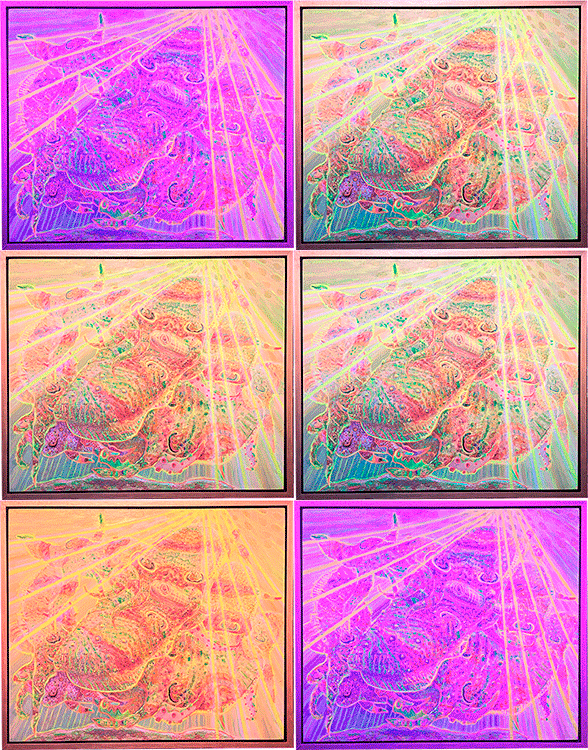
Oniricatchsub ›
2015
The apparent chromatic chaos follows a carefully constructed internal logic.
The lighting does not merely reveal the forms; it alters their stability. — Julian Merce
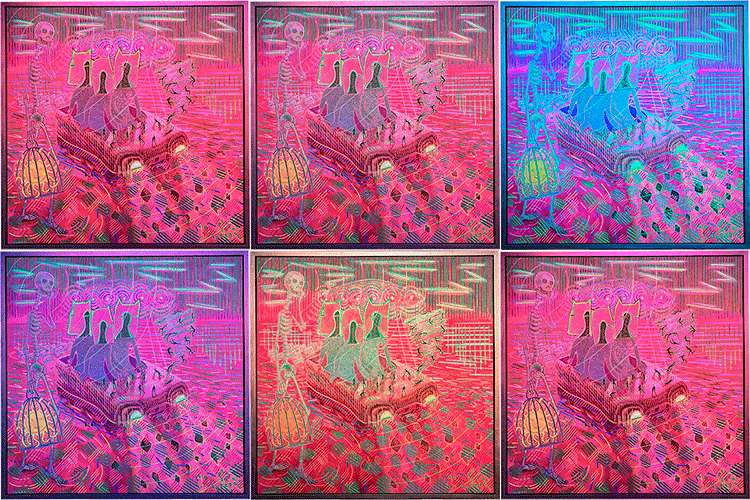
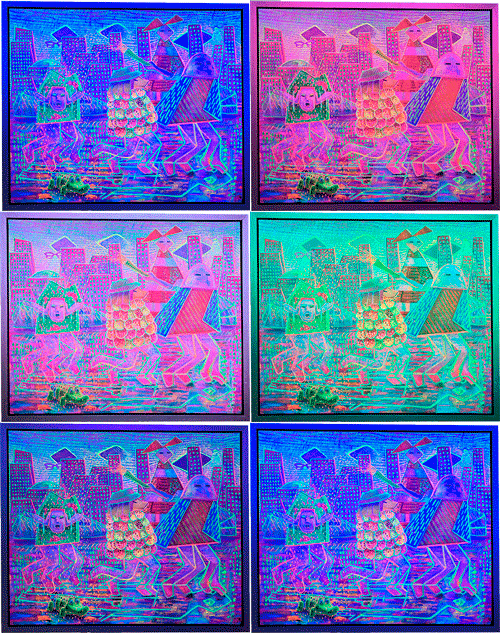
Antropogénesis de una locura ›
2024
An abyssal space where symbols meet and generate new precipices. — Julian Merce
Registration and authenticity
What is an NFT?
An NFT (Non-Fungible Token) is a unique digital record inscribed on a blockchain network. It
makes it possible to identify an individual edition and publicly verify certain data associated with it,
such as its authenticity, provenance, or belonging to an edition.
The Bellod Collection NFT. Each Bellod Collection edition is individually identified and associated with a unique NFT.
The NFT functions as the digital record of the piece: it identifies the acquired edition and makes it
possible to verify its belonging to the corresponding edition.
The artwork is not the NFT. The NFT is the record that identifies the artwork within the collection.
Accessing the Record
Once the artwork has been acquired, the collector will be able to access the digital record
associated with their edition from My Collection. There, they will be able to consult the identification
information of the piece and access the corresponding blockchain record.
The record will make it possible to verify:
• Identity of the edition
• Edition number
• Provenance
• Authenticity
• Belonging to the collection
In this way, the collector has both the artwork and its experience, as well as a verifiable digital record of their edition.
My Collection
When an artwork becomes part of your collection, a relationship begins that continues beyond its
acquisition. My Collection is the personal space where you can access the artworks that form part of your
collection and the complete experience associated with each of them.
From this space you can return to view the Official Digital Artwork, access the documentation of the
piece and learn about its process, its trajectory and the different manifestations that form part of its
journey. The collection also preserves the memory of each artwork: its identity, its record, its edition and the
contents that accompany the piece.As the artwork continues its journey, this space may incorporate new experiences, documents or
contexts related to it.
Your collection is not simply a record of the artworks you have acquired.
It is the place where your relationship with them continues
The work can remain on in the space and be contemplated again at different moments. Each encounter can be different.
A work that continues