



1. Latent Painting
Conceptual Field
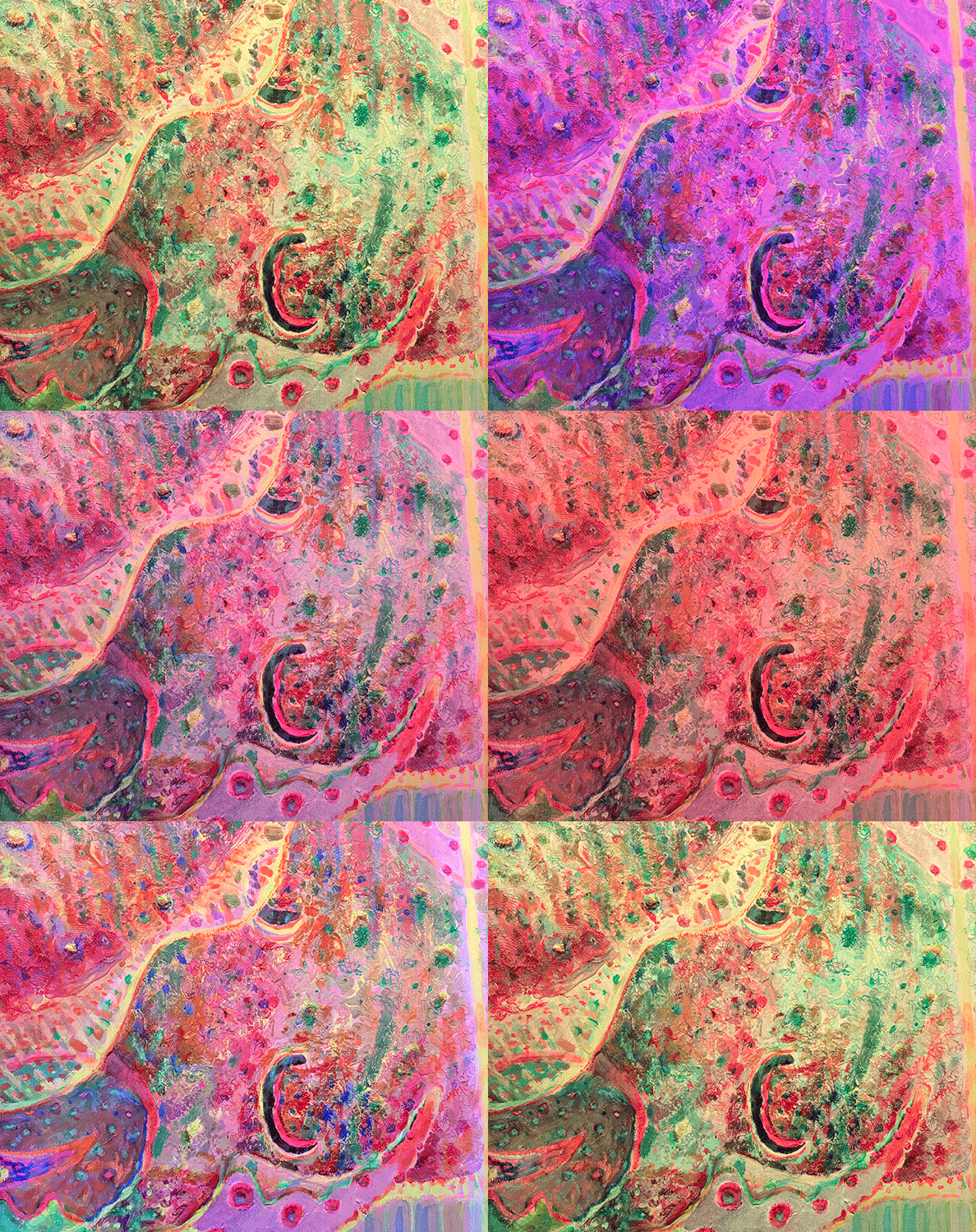
A pictorial practice in which the image does not manifest itself immediately or definitively, but remains active and receptive to luminous variation and to the viewer’s perception. The work preserves its iconic identity while traversing different visual states without fixing itself to a single one.
⸻
2. Broad-Spectrum Luminosity Painting
Luminous System
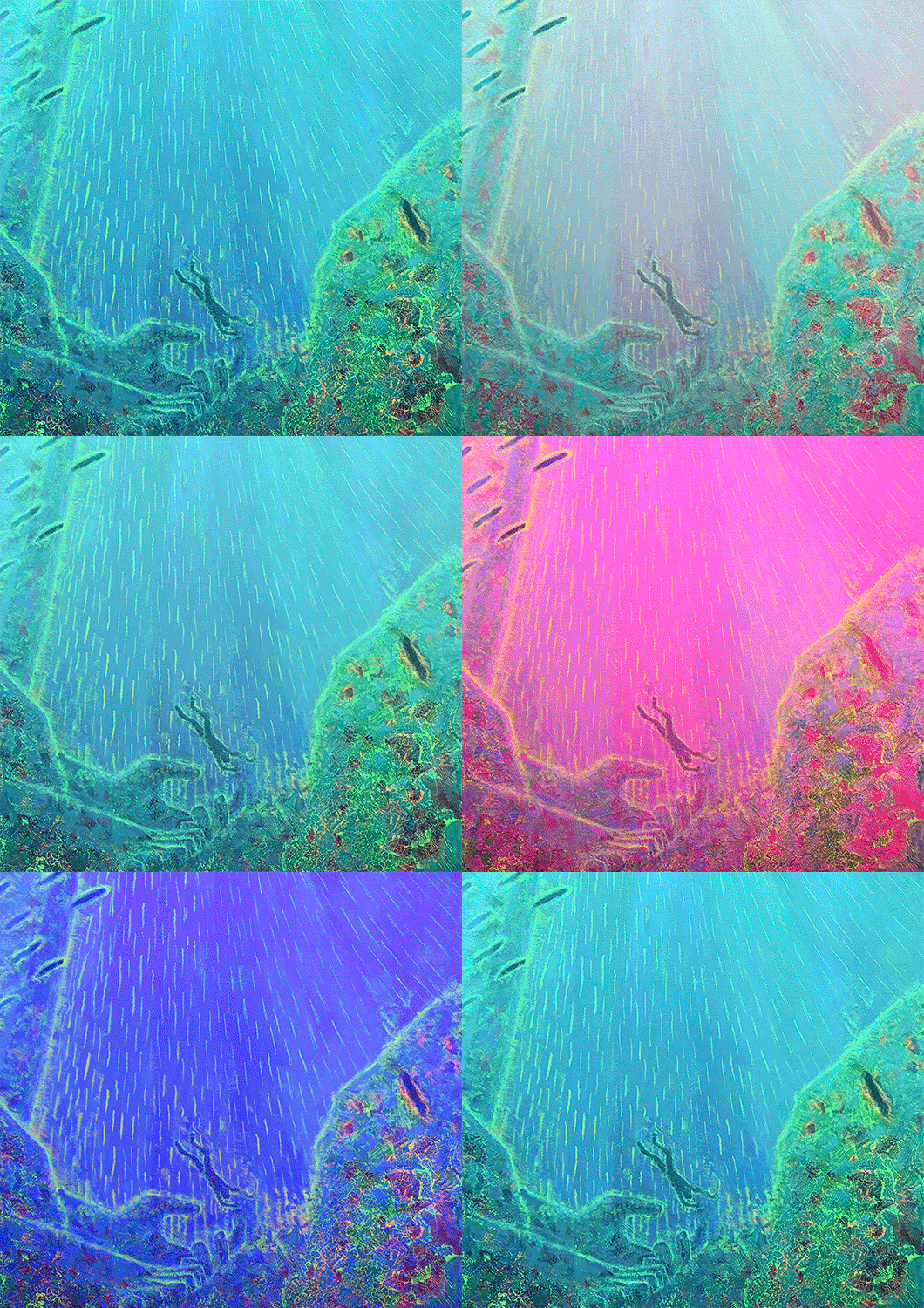
A pictorial system conceived to maintain formal and perceptual coherence under any type of illumination visible to the human eye, from ultraviolet to red wavelengths. It does not depend on a “correct” light source, but integrates luminous variation as a structural component of the work.
⸻
3. Color Dynamics
Chromatic Dynamics
The study of color movement understood as a psychophysical phenomenon. It considers the interaction between light source, pictorial material, and observer, as well as perceptual thresholds, color constancy, and processes of visual adaptation.
⸻
4. Chromatic Tension
Structural Condition
An internal tension of color generated by variation in the luminous spectrum. It keeps the image in an active state of construction without fragmenting it. It does not imply formal instability, but a dynamic balance between light, pigment, and perception. It is the energetic condition that sustains Latent Painting.
⸻
5. Kinetic Color
Chromatic Behavior
Color that manifests itself in perceptual transformation as a result of luminous variation. It is not defined exclusively by its material pigment, but by its behavior over time and by the interaction between light and observer. It is a visible expression of color dynamics within broad-spectrum luminosity painting.
⸻
6. Chromatic Chiaroscuro
Formal Articulation
A perceptual tension produced by variation in color and luminous intensity. It is not based solely on the opposition between light and shadow, but on the way color modifies luminosity and spatiality within the figure under each illumination.
⸻
7. Color Constancy
Perceptual Phenomenon
The ability of the visual system to perceive a color as relatively stable despite changes in illumination. This principle was extensively investigated by Edwin H. Land in the 20th century through his Retinex theory. In broad-spectrum luminosity painting, it functions as a perceptual mechanism that integrates different chromatic modulations without losing visual coherence.
⸻
8. Successive Contrast
Perceptual Phenomenon
A phenomenon in which a color is influenced by the one that precedes it on the retina. Each chromatic perception is conditioned by the previous one, generating variations in visual experience. This principle was formulated in the 19th century by Michel Eugène Chevreul in his studies on the laws of chromatic contrast.
⸻
9. Metamerism
Luminous Dependence
A phenomenon in which two colors may appear identical under one light source and different under another. In a pictorial context, it reveals the dependence of color on illumination.
⸻
10. Pictorial Fluorescence
Material Activation
The use of fluorescent pigments that act as a point of intersection between absorption and emission of light. They intensify chromatic presence, reinforce the line, and amplify the spatial vibration of the figure.
⸻
11. Mental Color
Perceptual Synthesis
Color configured in perception as the synthesis of successive luminous variations. It does not necessarily coincide with the physical pigment, but with the integration performed by the visual system after the action of successive contrast.
⸻
12. Pictorial “Ente”
Ontological Condition
A perceptual state in which the image ceases to be identified with a specific illumination and is experienced as an autonomous presence. It is neither a fixed object nor an optical effect, but a suspended condition in which form is experienced before being interpreted.
This glossary brings together the terms that structure Bellod’s pictorial practice. These are not fixed definitions, but approximations that situate the concepts within a field where image, light and perception interact actively.
Each term functions as a reading tool, open to interpretation, contributing to the construction of a language around painting as an experience.