-

2026, Estudio Zaídia, Valencia
-
2013; Estudio Ruzafa, Valencia -
-
2012, Estudio Ruzafa, Valencia -
-
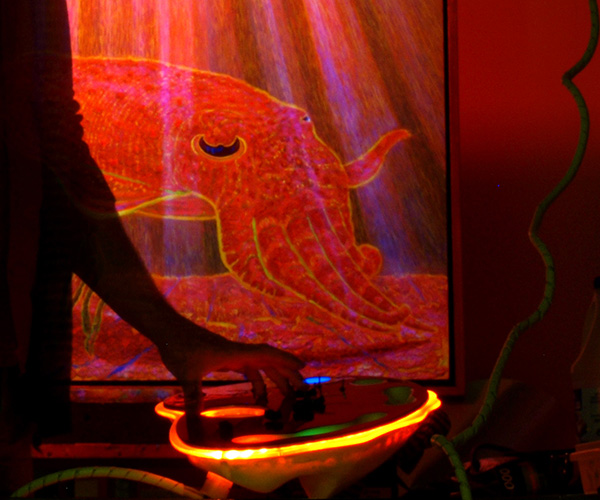
2025, Sesión Estudio Zaídia, Valencia
-
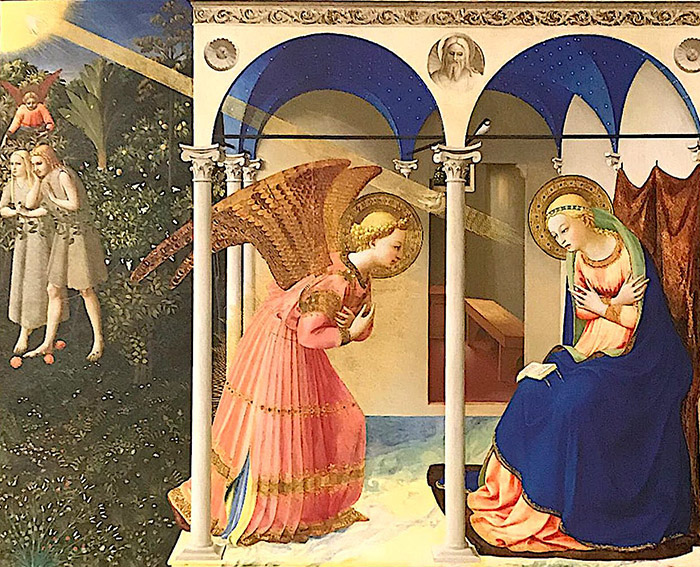
1425, La Anunciación. Fra Angélico. Museo Del Prado. -
-
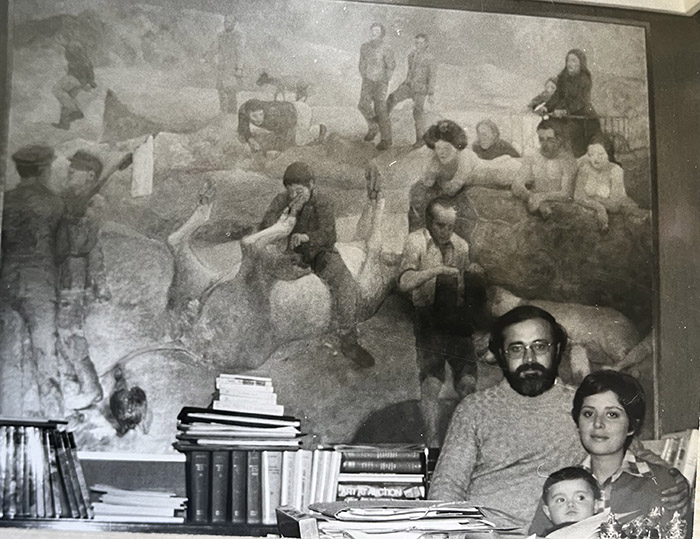
1976. Con mis padres, Guillermo Bellod y Remedios Ortuño. De fondo un cuadro de mi padre. “La máquina de escribir” -
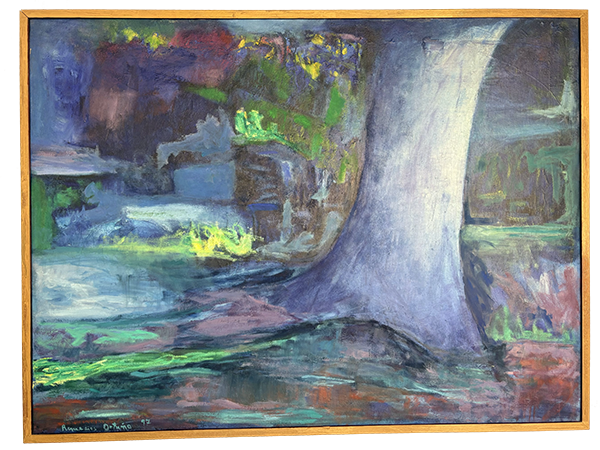
1995: S/T. Remedios Ortuño. Pintura. Técnica mixta. 146×120 cm. -
-
-
2011. Estudio Ruzafa, Valencia -
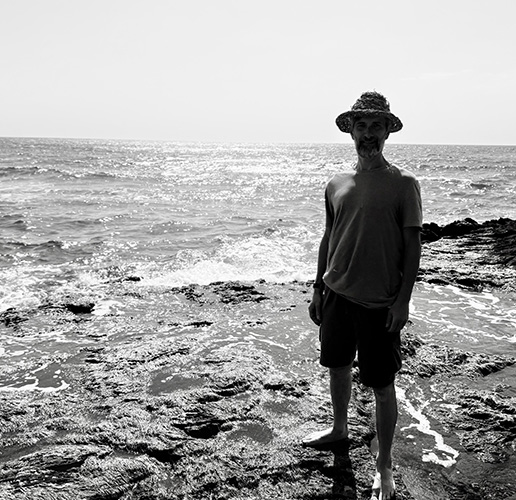
2026, Calnegre, Murcia
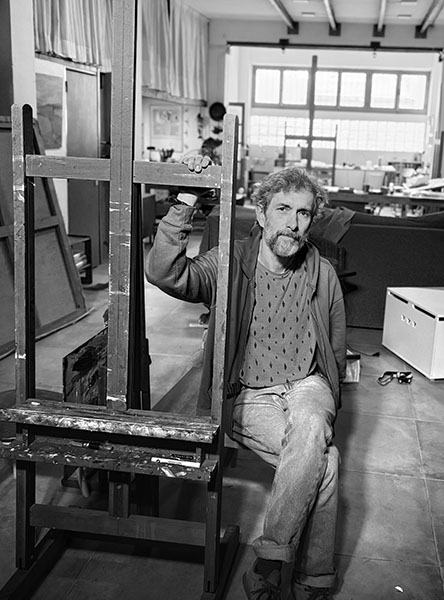
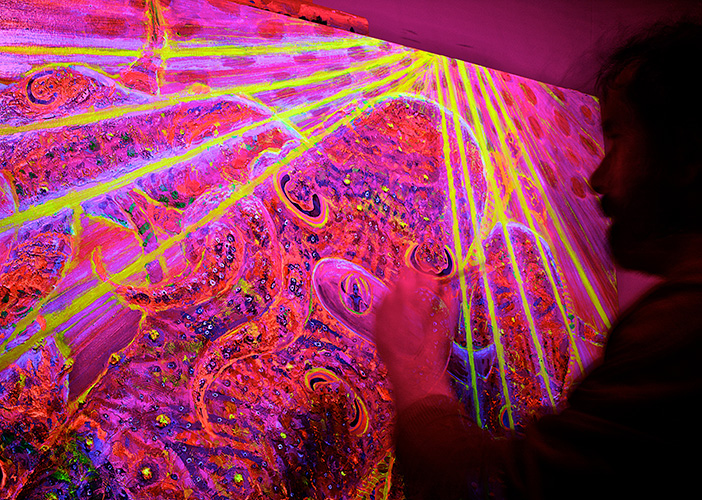
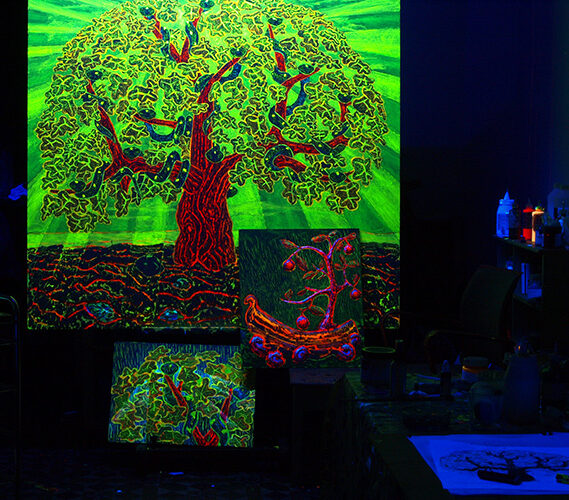
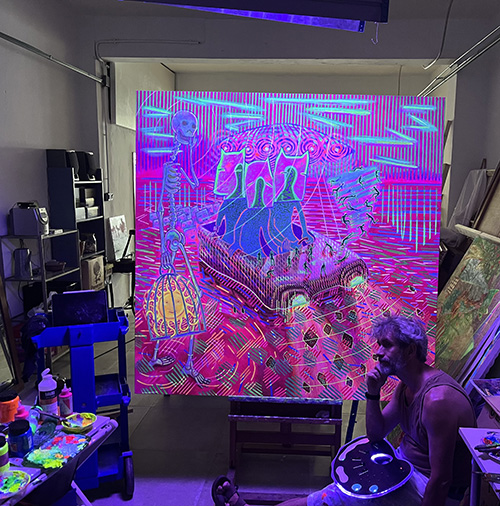
2026, Estudio Zaídia, Valencia
2013; Estudio Ruzafa, Valencia 2012, Estudio Ruzafa, Valencia 2025, Sesión Estudio Zaídia, Valencia
1425, La Anunciación. Fra Angélico. Museo Del Prado. 1976. Con mis padres, Guillermo Bellod y Remedios Ortuño. De fondo un cuadro de mi padre. “La máquina de escribir” 1995: S/T. Remedios Ortuño. Pintura. Técnica mixta. 146×120 cm. 2011. Estudio Ruzafa, Valencia 2026, Calnegre, Murcia
I investigate the nature of experience: the relationship between human beings and what surrounds them, their existence, and the mark that time inscribes upon it. Artistic practice becomes a territory of knowledge — a space in which to explore the limits of perception, reality, and the visible.
I work with symbols of existence: those that move me and that I need to draw in order to sustain an idea and move through catharsis. Among them, the animal figure appears recurrently as a symbolic presence — a manifestation of a primal energy that tensions the human from within. Painting, in this sense, becomes a device for thought and emotion, a place where the sensory and the conceptual converge.
I conceive art as a great celebration. A celebration to which emotion, knowledge, aesthetics, culture, technology, truth, and even deception are invited. Each arrives with something to contribute; at times one occupies the center, at others it withdraws and allows space for the rest. There are no fixed hierarchies: everything blends, contradicts, and intensifies. Yet the true host is not the one who creates the work, but the one who encounters it. The viewer — especially one who approaches without precondition — activates the celebration and gives it meaning.
In the phase of ideation, I allow myself to be guided by the marks; it is there that composition and rhythm begin to unfold. Drawing fixes the identity of the work; its pulse and structure are inscribed within it. Light organizes its breathing and determines its intensity. Painting is the territory in which that structure becomes visible and takes form.
Among the affinities that resonate with my current work are the early painters of the Italian Renaissance. What interests me most is their construction of the painting as a space of contemplation rather than merely a narrative scene. Light does not appear solely as a naturalistic phenomenon, but as an autonomous presence. I seek an idealization understood as a mental and symbolic state: the fragility and tension between the human and the transcendent, expressed through minimal gestures charged with meaning.
On a theoretical level, I feel close to the reflections of art critic Raúl Chavarrí, particularly his formulation of ultrarealism as an inquiry into the essence of things and the intensification of reality through perception. From this perspective, painting does not reproduce the visible; it heightens it, concentrates it, and brings it into a state of greater presence.
If I were to name two primary influences, they would be my parents. From different approaches and languages, they taught me to enter into dialogue with the painting, to listen to it, to recognize what it demands beyond my own will. That attitude of listening remains at the core of my practice.
Bellod’s pictorial practice is articulated around the relationship between image, light and perception, understanding painting as a field in constant transformation. The work does not present itself as a fixed form, but as an appearance that depends on the conditions in which it is observed.
In this context, the visible coexists with a latent dimension that is not immediately given, but requires time, attention and a contemplative disposition. Painting thus becomes a space where the image does not simply appear, but gradually emerges, entering into relation with the gaze beyond its immediate appearance.